CVs and applications
Detect and tokenize names, emails, phone numbers and identifiers before summarizing a CV. Also minimize contextual information that could identify an individual.
CVs, interviews and employee records contain data that should not reach an AI model without controls. Apply policies before each request and record what happens.
Detect and tokenize names, emails, phone numbers and identifiers before summarizing a CV. Also minimize contextual information that could identify an individual.
Protect transcripts and messages before generating summaries or drafts. Define what data each task actually needs and who can access it.
Apply policies to salary, banking and health data. Block information that must not leave and restrict token reveal to authorized users.
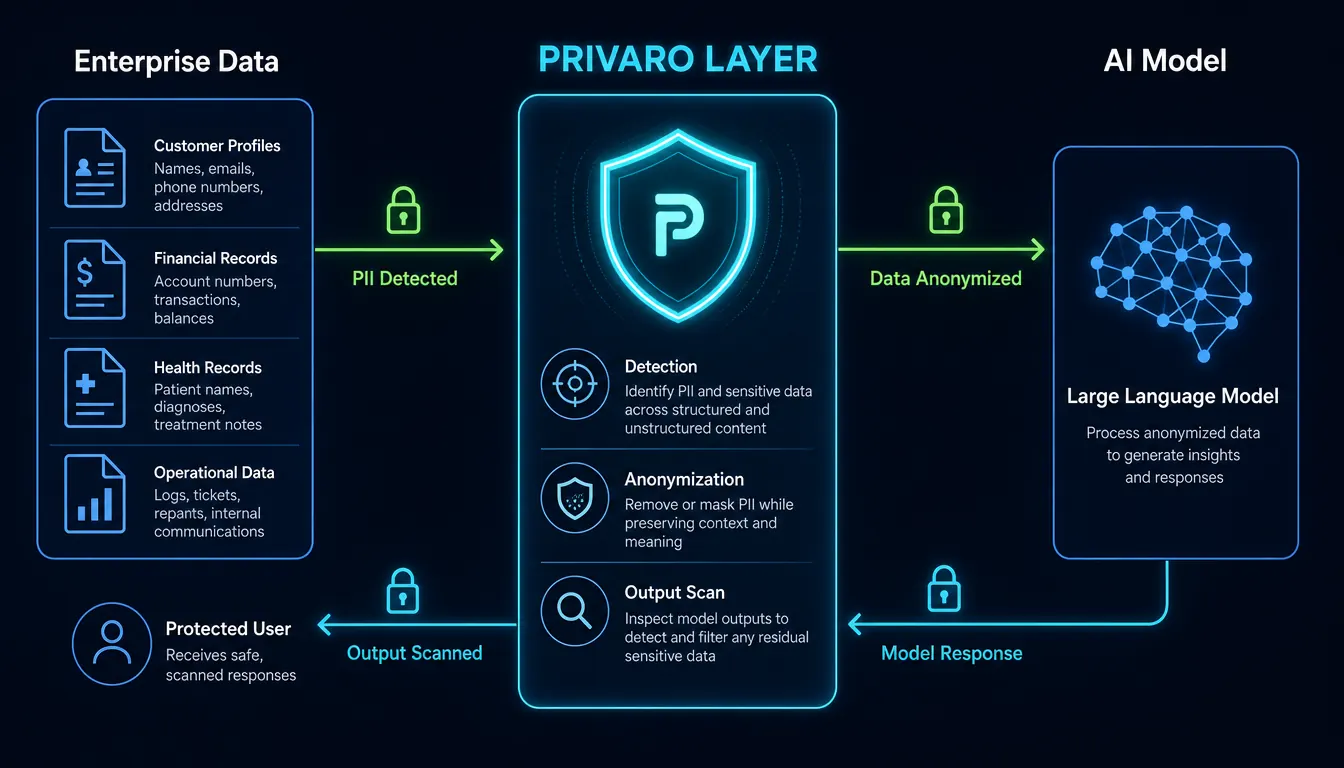
Detection → policy → tokenization, anonymization or blocking → model → output review → audit log. Relay mode can protect responses before delivery; streaming detections are audited, but the text may already have reached the user.
Privaro is a data protection layer, not a candidate-scoring system or a guarantee against bias. Tokenization is pseudonymization: it does not remove GDPR obligations or replace human review.
Before processing CVs with AI, document the legal basis, inform candidates, limit purpose and retention, review the provider and international transfers, and assess whether a DPIA is required. Also review GDPR Article 22 restrictions on solely automated decisions.
AI uses in recruitment or employment evaluation may be classified as high risk under Annex III. Check the updated timeline and Digital Omnibus status in our EU AI Act guide; data protection obligations do not wait for that timeline.