When 4,200 AI agents make decisions at once, governing them one by one stops working
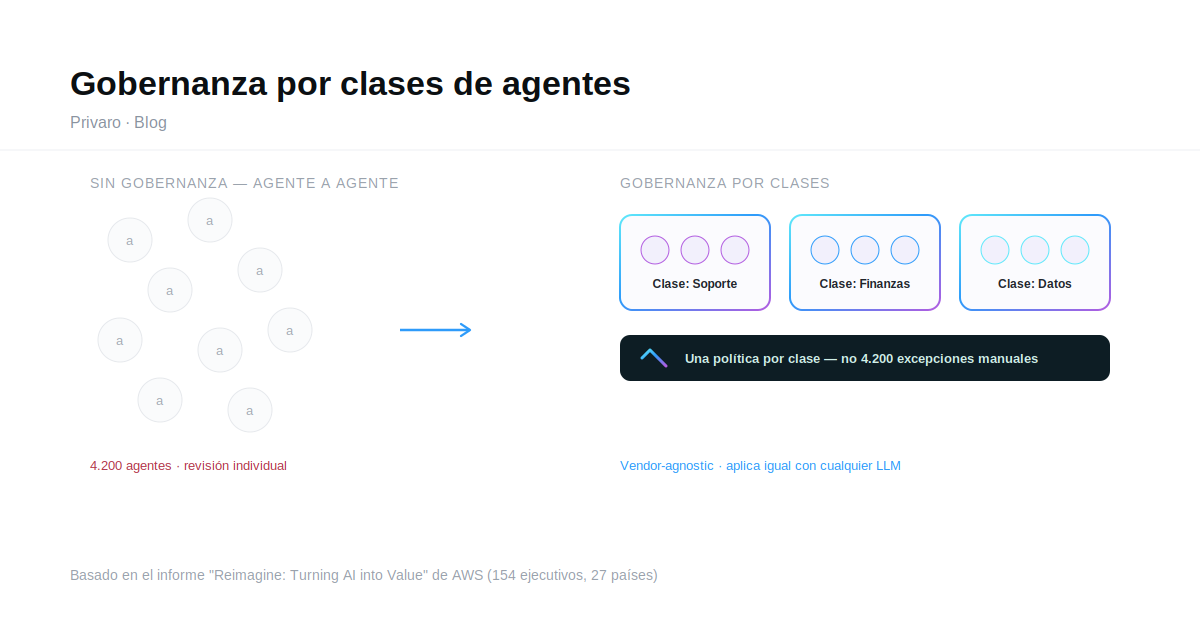
AWS has just published Reimagine: Turning AI into Value, based on interviews with 154 executives in 27 countries about what separates organizations that get real value from AI from those stuck in the pilot stage.
One of the most concrete findings comes from OLX: what happens to governance when 4,200 AI agents make decisions simultaneously? Its answer was clear — governance that operates by classes of agents, not agent by agent. At that scale, reviewing permissions and behavior one by one is no longer viable.
It is the same pattern we are seeing in the market: Broadcom launched AgentMinder in August, a layer that verifies each agent's identity and authorizes each action before it touches a corporate resource — control before execution, not an audit after the fact.
The challenge for most companies is not just "how many agents do we have?" but whether they can apply a consistent policy to all of them without making every new integration a manual exception. And if those agents handle customers' personal data, the question becomes twice as urgent with GDPR already applicable and the EU AI Act’s phased rollout: following the AI Omnibus, Annex III high-risk rules apply from 2 December 2027, and product-embedded high-risk rules from 2 August 2028.
See how Privaro applies consistent, provider-agnostic governance to every model call →